

VOX AC100 - UPDATES AND NEW INFO
January to May 2022
31st May
Perhaps a little known fact. By mid 1969, Tom Jennings had become principal UK agent for American-made Kustom amps in all their glory - outlandish padded upholstery exteriors, ports at front, and gargantuan proportions. Below, a couple of pics from trade reports: Tom and Chuck McKinney of Kustom, and a shot of the Jennings/Kustom room (part of a full-page montage of various stands) at the Russell Hotel Trade Fair, late August '69.


The buzz-words around the wall are: "Performance", "Quality", "Durabiility", "12(?) Models", "Power", "Appearance", "Sound".
23rd May
In October 1963, having attended the NAMM show for the first time four months earlier, Tom Jennings applied to trade-mark the name "VOX" in the USA, an application subsequently granted. Whether his decision stemmed on the one hand simply from prescience or on the other the concrete need to secure the name following a distribution deal is not known at present. Tom certainly had at least one distributor - probably in the shape of Zeb Billings in Milwaukee - by the time of the NAMM show of '64.
At any rate, when the deal with Thomas Organ came to be sealed in late August 1964, one of the conditions placed upon JMI was that pre-existing arrangements should be wound up. Thomas became "exclusive" distributor, later gaining its own rights to "VOX" as a trade name in the USA. More on that to come.
One of the peculiar consequences of Thomas's "ownership" of the name was that "Vox Sound Equipment Limited", the company formed by Cyril Windiate and Reg Clark in the summer of 1968 after the collapse of JMI, could not exhibit English Vox equipment in America (whether it wanted to or not). Thomas's deal had been with JMI.
This did not deter VSEL's successor though - VSEL unfortunately lasted only until December 1969. "Vox Sound Limited" the new incarnation of "Vox" went to the NAMM show in 1971 as the "English Organ Company Limited". A pretty neat workaround.

Detail from the published US Patent records - application filed on 11th October 1963.
15th May
Thanks to Camille, further pictures of AC100 serial number 1711, chassis number 1251, soon to be restored:


4th May
Thanks to Geert, pictures of Jennings AC40 (JV40) serial number 1157, with drawbars instead of volume and tone control knobs. Of the 300 AC40s sold, well over half had conventional controls.
The serial number plates notes that the design is "Protected by Pat. App. 16598 and 50889 and Others". A search through the Patent Applied For records unfortunately leads nowhere (not for the first time).


1st May
Tom's stand (315A) at the Frankfurt Fair, February 1969, the company still "Jennings Electronic Developments" - a slightly taller shot than the one below (entry for 19th April) featuring John Oram.

Frankfurt Musikmesse, February 1969.
30th April
An unusually long review of the JMI stands at the Russell Hotel Trade Fair, August 1967, published in a German music trade journal. Mike Carr was a respected jazz organist who later went on to endorse Hammond.

August 1967.
28th April (2)
A plate for the Accordion Organ unit, introduced at the Russell Hotel Fair, August 1965, "Jennings Musical Industries" at its head - a version of the design was also employed for Public Address equipment, on certain items at any rate (see the entry below).
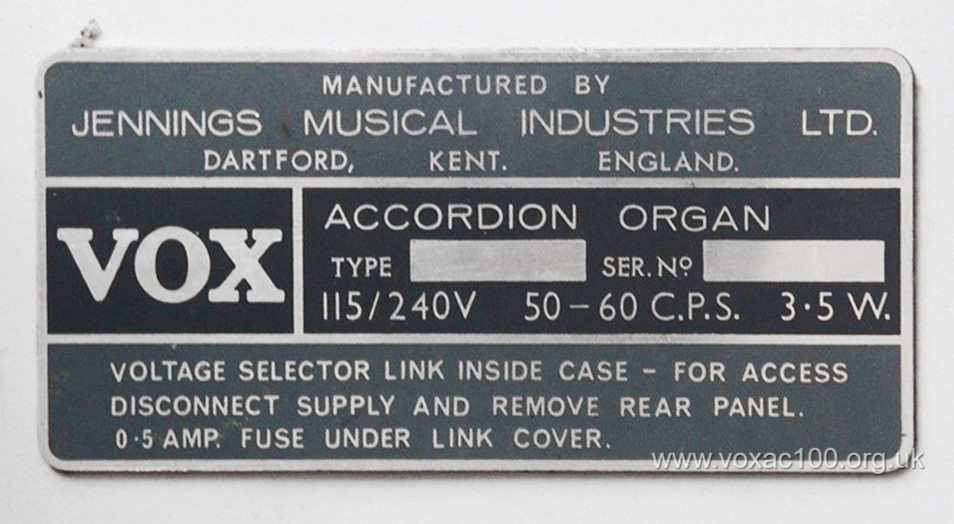
Vox Accordion Organ plate.
28th April
The serial number plate of a JMI Public Address (Microphone) Mixer from c. 1966 - serial number 232. These were termed the "M III", "M3", and "MK 3" interchangeably. The plate was a version of one developed by the Jennings Organ Company for its organs (sometimes amplifiers too) in the late 1950s.
"Vox Sound Equipment Limited" - not to be confused with the later company of the same name brought into being by Cyril Windiate, Reg Clark, et al., in the summer of 1968 - is in this instance the original entity created for the sale and distribution of Vox PA equipment in the mid 1960s by Tom Jennings. Its directors (named in letterhead) were Tom and Eric Summer chairman of Royston Industries, the group that controlled JMI - not Joe Benaron as noted initially. More on this to follow.
Quite where the serial number sequence of the mixer units began is unknown - but 100 seems likely.

Vox PA Mixer serial number 232.
22nd April
Some pics relating to the Frankfurt Trade Fair in 1966 from German music trade sources.
Hall 12 was, through to 1968, the main venue for the Musikmesse. Two smaller spaces - really annexes to Hall 7 - were also pressed into service. In 1968, Hall 7 was redeveloped as a new venue - Hall 11. See below, entry for 15th April.
But Halls 11 and 12 were soon outgrown, and an entirely new structure - Hall 5 - was made ready in the empty lot behind Hall 4 (see the picture below) in 1970.
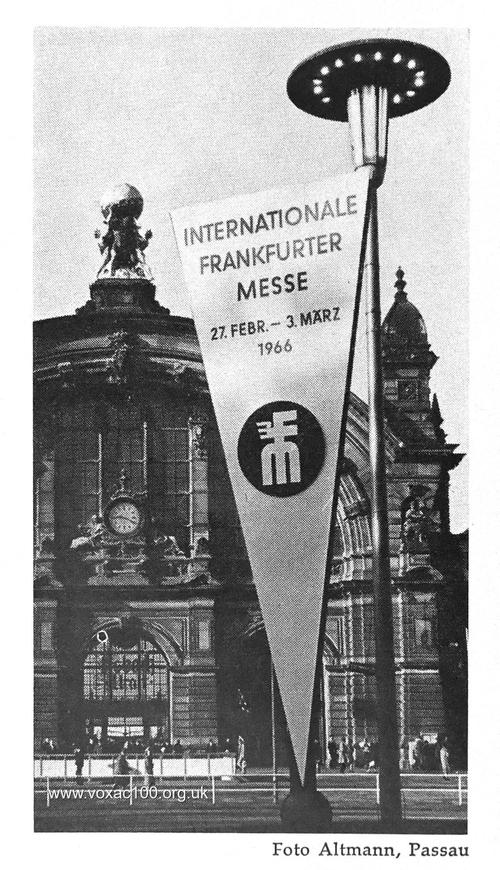
Banner in front of the old Trade Hall.

A shot of the Fair buildings as they were in 1966. Hall 12 is indicated with an arrow.
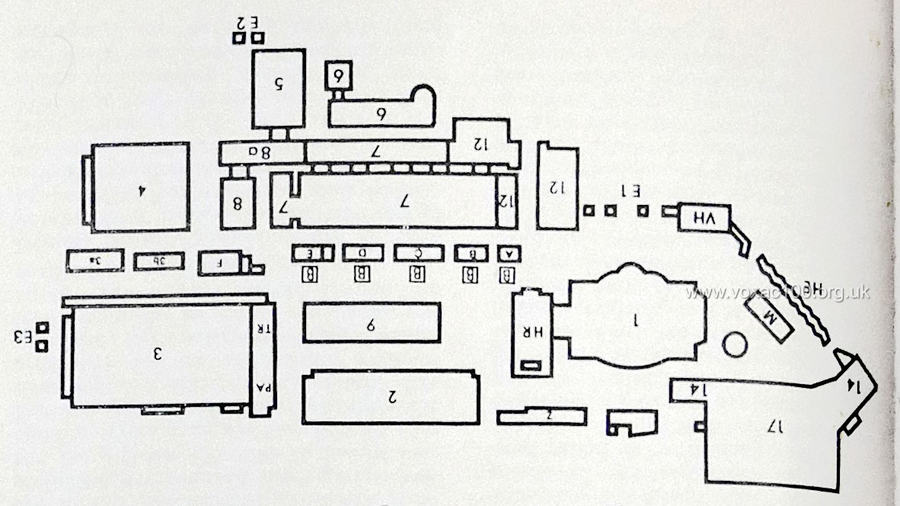
Plan, 1966, flipped to align better with the picture above.
19th April
John Oram at the Jennings stand (385A), Frankfurt, late February 1969. John, formerly of JMI, joined Tom's new company soon after Dick Denney in late 1967, Note in the booth in the background, a poster-size version of the cover of the "Jennings Scene" brochure - cover in yesterday's entry.
Behind and above John are two "Jennings Sound" standees - the one on the left naming Dave Clark, and Brian Bennett of the Shadows, the one on the right Hank Marvin.

Frankfurt Musikmesse, February 1969.
18th April (2)
Just to note that as a first step in the updating of the Jennings coverage (1968-1975), there is now a new page for Jennings in 1969 - still a good deal of new material to come though. Progress - at various stages - will be signalled here.
Below, (i) a detail of the cover of the Jennings brochure produced to coincide with, or perhaps shortly after, the Russell Hotel Trade Fair, August 1968; and (ii) the catalogue/flyer produced for the Fair of 1969.
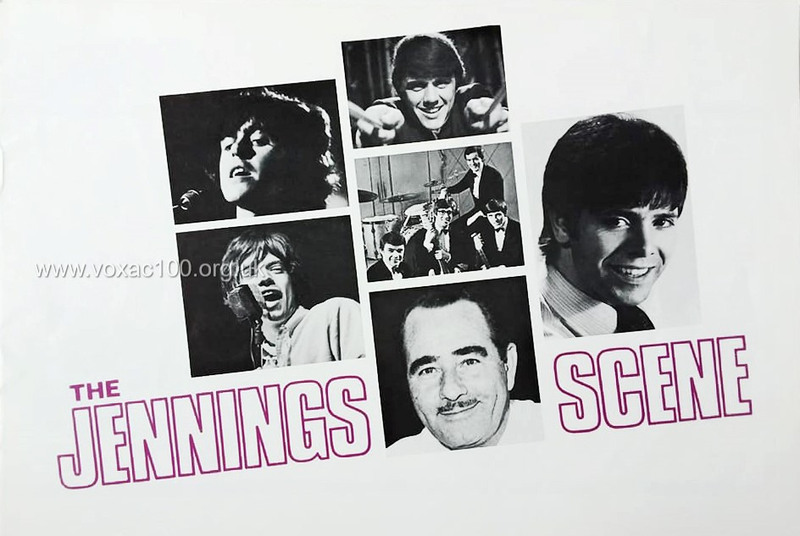
1968
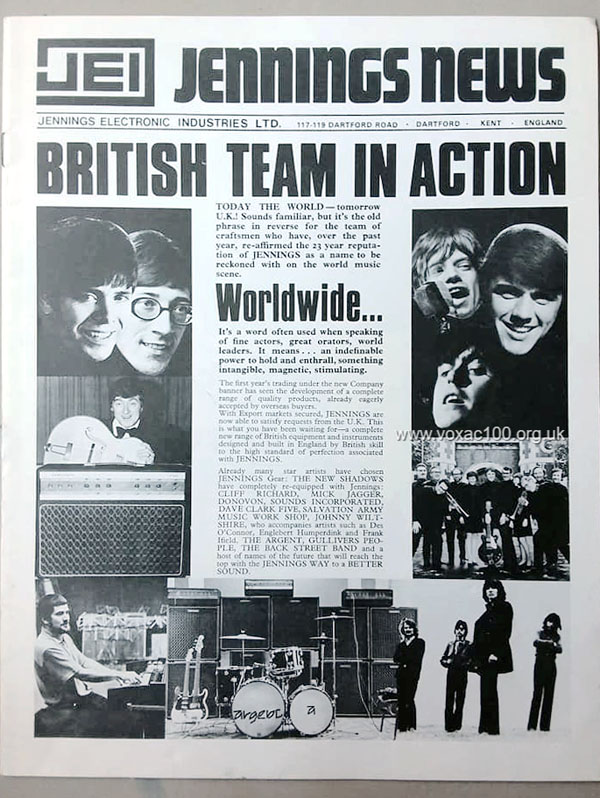
1969
18th April
Thanks to Nick, pictures of Jennings AC40 serial number 1172 from 1971 - the Celestion alnico T1096 drivers (the 15 ohm version of the T1088) have the date code "DD23" = 23rd April 1971.
On its serial number plate, the amp is designated as a "JV40", as most other early AC40s probably also were. The earliest report of the Russell Hotel Trade Fair of August 1970 (at which the model was introduced) certainly gave "JV40". Further below, a rough-print picture of the Jennings stand at the show.
The page on the Jennings AC40 is in the process of being updated - some more examples to come. Around 300 AC40s were made before the amp was phased out in 1973.


JV40 (AC40) serial number 1172.
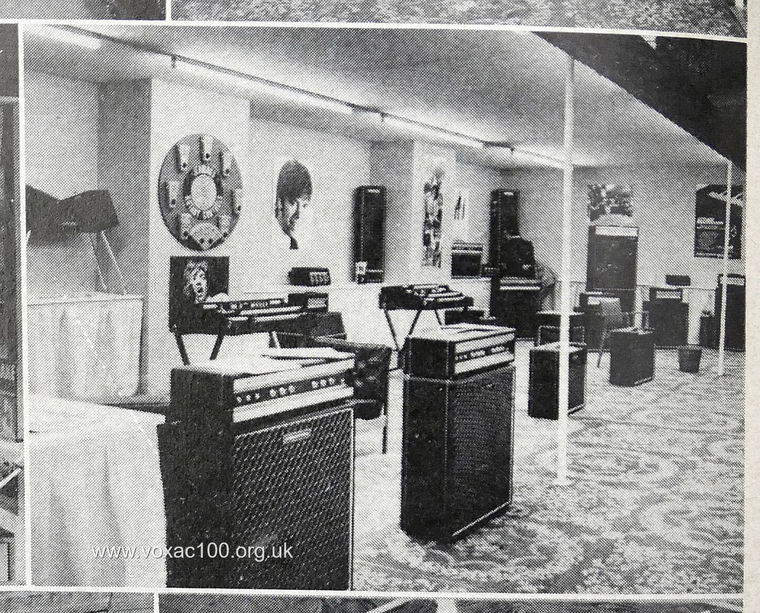
A small rough print picture of the JEI stand at the Russell Hotel Trade Fair, August 1970 - JV40s right of centre at front.
15th April
Some new info coming from printed German sources on the Frankfurt Trade Fairs. Today: preliminary things on 1968. JMI had two stands - numbers 129 (the smaller of the two) and 146.
To the left of stand 129 (as one faced it) was the Standel Co. (USA). To the left of stand 146 was Herrburger Brooks Ltd (which made keyboards for Vox organs); to the right Jenco Musical Products (an American company).
The page on Frankfurt 1968 will be updated shortly.
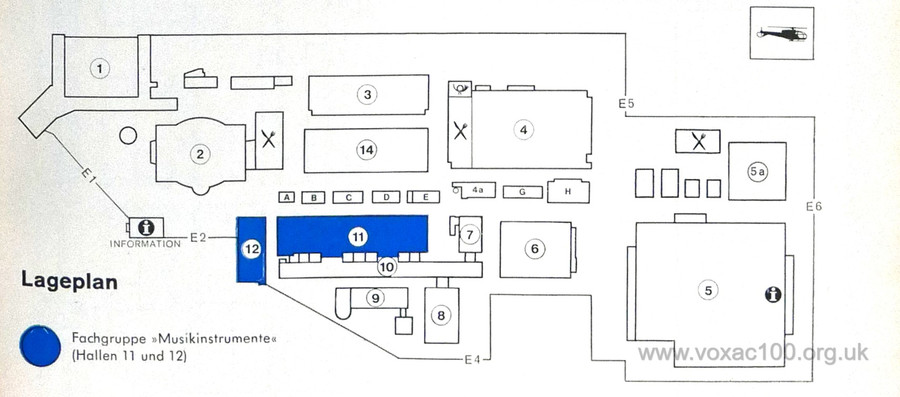
A ground plan of the Fair. The Musikmesse took place in Halls 11 and 12, marked in blue.

A ground plan of Hall 11. The JMI stands, both in "Gang" (row) "A", are marked in red - 146 at top, 129 across and below.

A detail of the display in stand 146 showing the two new solid state PA amplifiers (SSPA50 and SSPA100).
13th April
Thanks to Robert Valentine, a picture of a Jennings Electronic Industries O50, modified by Dick Denney to produce more treble (two additional controls on the front panel). The O50 - "O" standing for "Organ" - was brought to production during the course of 1969 and shown for the first time at the Russell Hotel Trade Fair in August - see the press notes at the at the foot of this page. It had by design what Jennings termed a "flat response". These are good-sounding amplifiers, though lacking a little of the sparkle needed for guitar.
Details of a JEI O50 from around 1970 can be seen on this page.
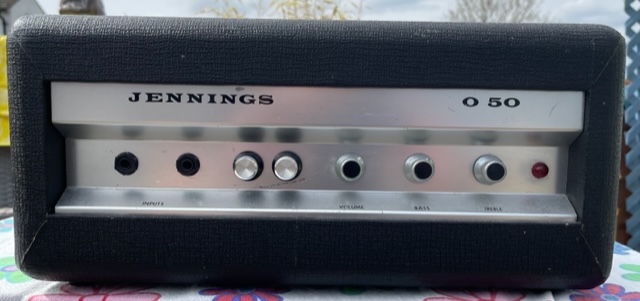
Robert's O50, modified by Dick Denney. Robert worked for JMI from late 1959 to 1964.
9th April
An advert published by Hurley's Music (Dublin) in the Irish music press shortly after the Russell Hotel Trade Fair of August 1965. The text and style of font come from hand-outs that JMI produced in advance of the Fair. The AC50 is a standard catalogue picture from 1964.
Whether JMI designed the ad for Hurley's or simply provided the materials is not known at present.
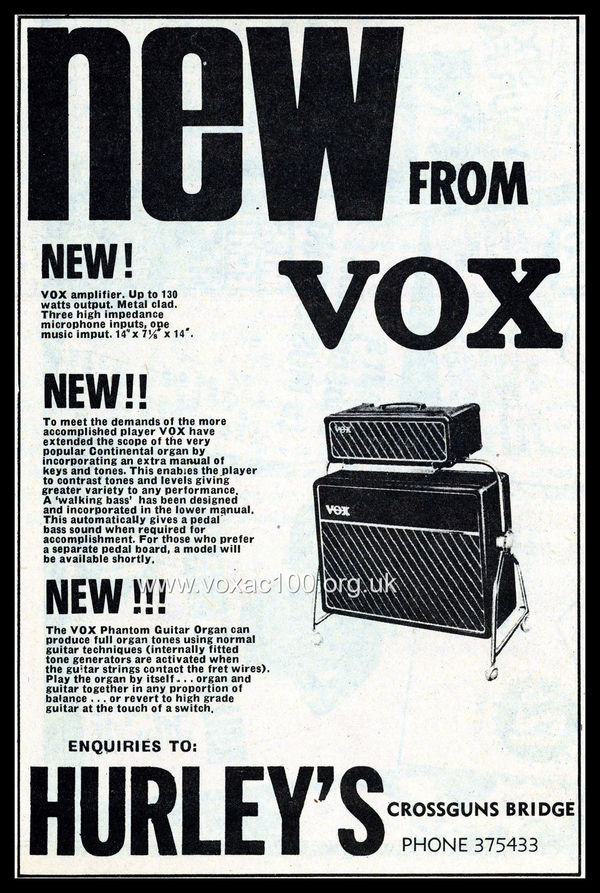
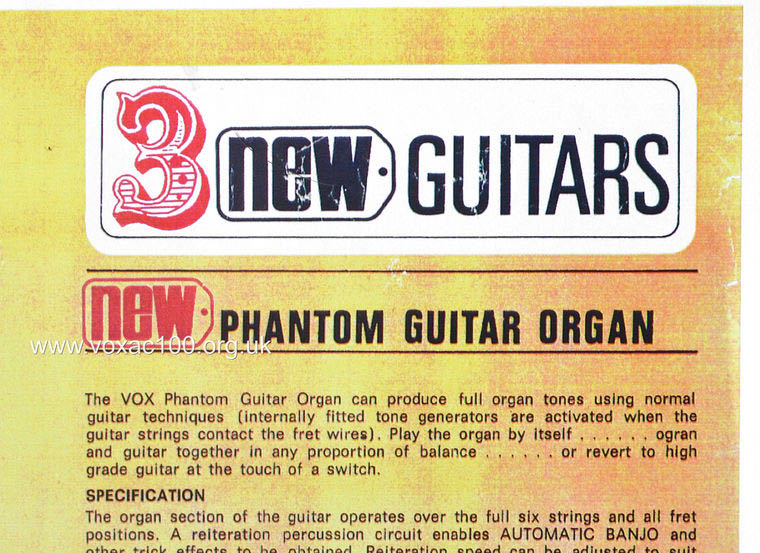
A detail from one of the two versions of hand-out produced by JMI for the Fair.
8th April
Music trade press, November 1968, the inset picture taken in late August '68 in a pub around the corner from the Russell Hotel Trade Fair. John Oram, formerly of JMI, had joined Tom's new company - at this time "Jennings Electronic Developments" - shortly after Dick Denney. Alan Marcuson was James How's General Sales Manager. Interesting to note that one of How's factories was in Dartford.

November 1968
5th April
A further note on the JMI display at the Russell Hotel Trade Fair, August 1962, from the popular music press. The text of the right-hand column (which disappears slightly into the crease) has been transcribed below.

"This model is the forerunner of others in the present Vox range which will be completely transistorised in the next few months. A transistor guitar-tuner unit is also a feature of the display.
A new Vox development to be operated under GPO [General Post Office] licence by professional musicians, is a miniature transmitter which fits into the pocket, a Vox Shure microphone, and a compact receiver unit which attaches to any make of amplifier.
This dispenses with a trailing microphone lead.
A new semi-acoustic shaped electric guitar will be the first departure from the extensive solid body series available at present.
Two additional non-acoustic electric guitars are to be exhibited - the Soundcaster and the Symphonic Bass both with a new feature, the dual operational string mute which gives various tonal effects."
3rd April (2)
Serial number 2105, mid 1967, probably built to circuit diagram OS/167, with doubled-up filter capacitors and an ECC83 as V3 (phase inverter) - see this page. Likely to have been exported to Europe originally, as many of these late AC100s were. Sold in the USA in 2021.


Sold in the USA in late 2021.
3rd April
Serial number 1711, probably made in the second half of 1966, currently in France, some changes.


Serial number 1711.
30th March
Part of an advert for the T60 amplifier, late August 1962, giving an indication of the items to be exhibited at the Russell Hotel Trade Fair, 27th-31st. Further material can be found on this page.

August 1962.
28th March
An ad placed by Tom Jennings in the music trade press, February 1969 - in advance of the Frankfurt Fair. A similar ad was published in Melody Maker - see this page.
Seven models of pedal - all rotary action - are said to be available. Three certainly, perhaps others, had been shown at the Russell Hotel Fair in August '68 along with the J40 and J100 combo amplifiers, and at least one type of Line Source PA speaker column.
The rotary speaker sets, expressly said not to be "Pulsation" units (the name that Jennings used for the equivalent of the Vox "Gyrotone"), were probably new in February '69.

Music trade journal, February 1969.
19th March
A piece in the music trade press, 3rd December, 1964, clarifying some details of the deal with Thomas Organ - a first order worth 1 million dollars (around £350,000 at the time), and a "second stage" worth $1.5 million (around £534,000). This corroborates a report, published in the mainstream press on 17th November, which also termed the $1.5 million order a "second stage". Evidently the second order, planned in August, was contingent upon the success of the first (a reasonable precaution for both parties).

Music trade journal, December 1964.
17th March
The page on Vox orders, 1962-1966 is being updated in stages, a good number of new reports to be added. Notes will be added to this updates page when breaking-off points have been reached.
16th March
An interesting glimpse of Jennings starting out on its export drives. The Frankfurt Trade Fair of 1962 had just taken place when Andrew Cameron sent his letter to the Board of Trade. Frankfurt 1963 was the first continental Fair attended by JMI.
Note that the sales push had to be paused to allow production to catch up.

Music trade journal, April 1962.

Board of Trade journal, March 1962.
14th March (2)
Local Dartford press, 28th April, 1967, reporting Tom Lee's visit to the West Street Works - picture in the previous entry, below.
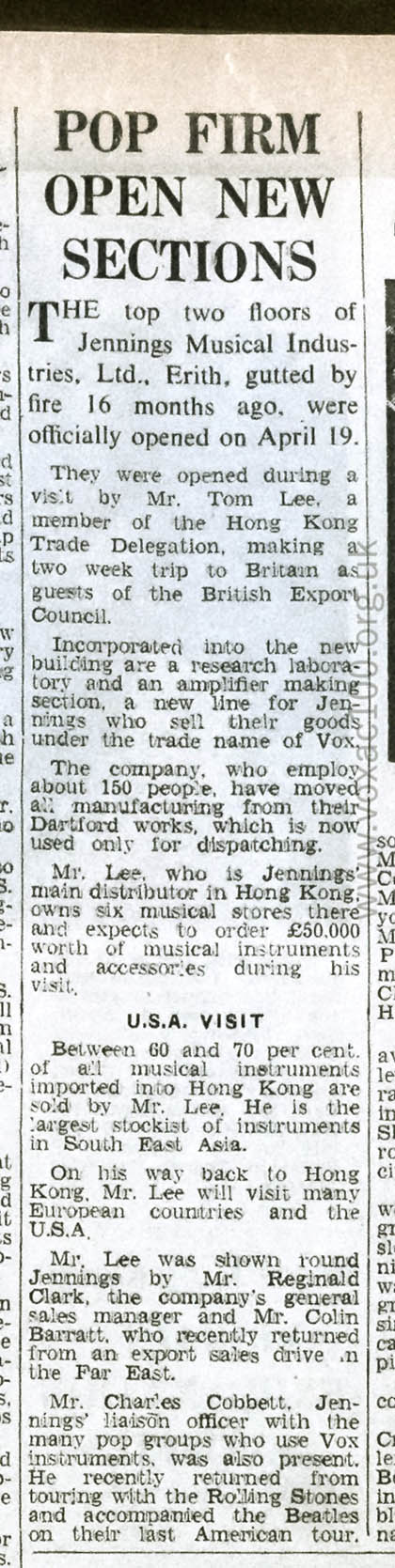
28th April 1967.
14th March
A small picture in "The Beacon", July 1967, of Tom Lee visiting the West Street Works in April, shortly after JMI had moved the organ and guitar production lines that remained at Dartford Road to Erith.
Tom Lee's visit and his purchases from JMI were widely reported in the music trade press in Spring 1967.

Tom Lee's visit to the West Street Works in April '67, picture published in July 1967. In the background Reg Clark, General Sales Manager.
12th March
Thanks again to Martin Kelly, a shot of Rodney Angell's travel documents for the Frankfurt Fair, February 1967. As a Research Engineer in JMI's organ division, Rodney's chief role at the Fair was to set up the organs for display - principally the new Riviera, still in prototype form. Shots of the organ at Dartford Road (being played by Sidney Irving MP) can be seen on this page.
The Trade Fair pages will be updated shortly.

21st February
Thanks to Martin, a shot of a Thomas Organ "Vox Service Flash", dated 11th October, 1965, relating to the fitting of a surgistor - a sort of thermistor/brimistor (made by the Würth [Wuerth] company) - to AC100s, the idea being to give a "soft start" to the amp. To judge from what is said, the surgistor was added before the AC100s were sent to dealers. Replacement capacitors were invariably Spragues. The amps in view were for the most part the ones JMI built to the "100W Amplifier" circuit diagram (serial numbers in the high 400s to around 720) - ie. no brimistor, pre-AC100 mark 2. Surgistors were also fitted to certain AC50s.
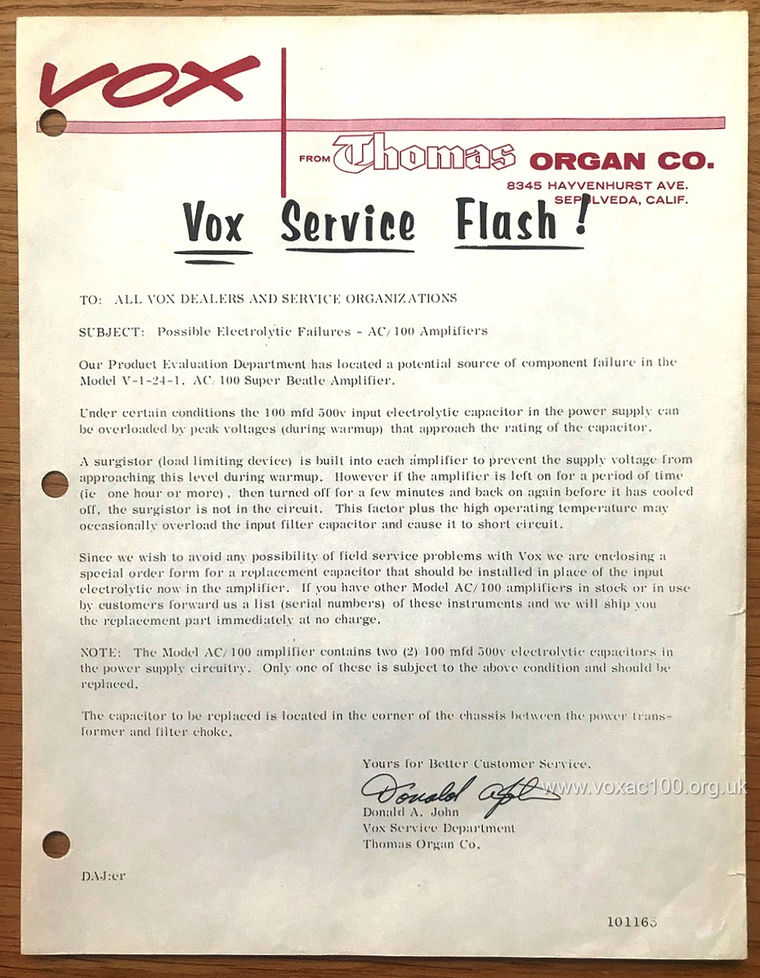
Dated 101165 at foot. Note that the AC100 is still referred to as the "Super Beatle".
Below, a picture of a surgistor fitted to an amp with a serial number in the 500s between the voltage selector and the transformer (the position selected by Thomas Organ). Underneath, a shot of the shadow left by one that went up in smoke (in serial number 520).
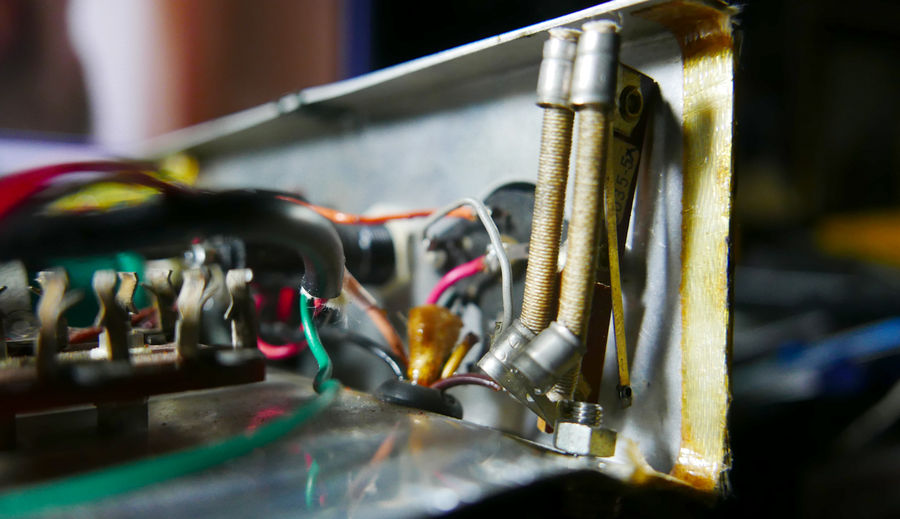
AC100 ("100W Amplifier") serial number in the 500s.
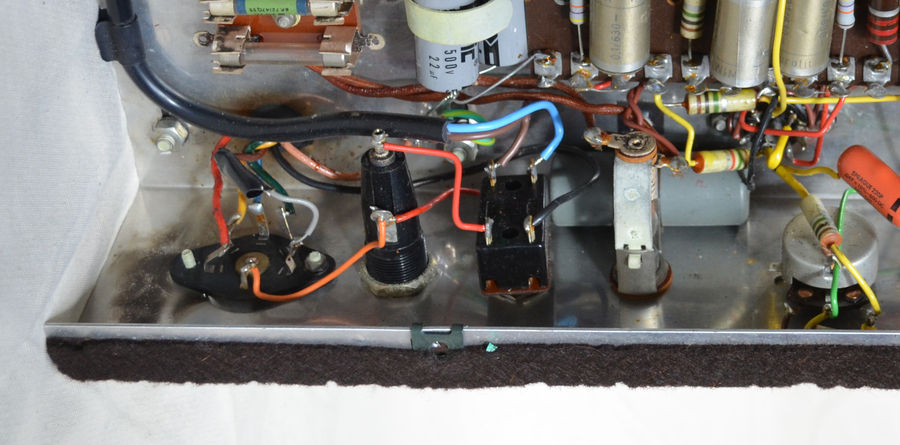
AC100 ("100W Amplifier") serial number 520. The shadow of a blown surgistor at left, the wiring put back to normal, but the nut used to secure the surgistor not returned to the voltage selector.
19th February
A rough-print picture of the Jennings AR-1 rhythm unit, shown for the first time at the Russell Hotel Trade Fair, August 1970.
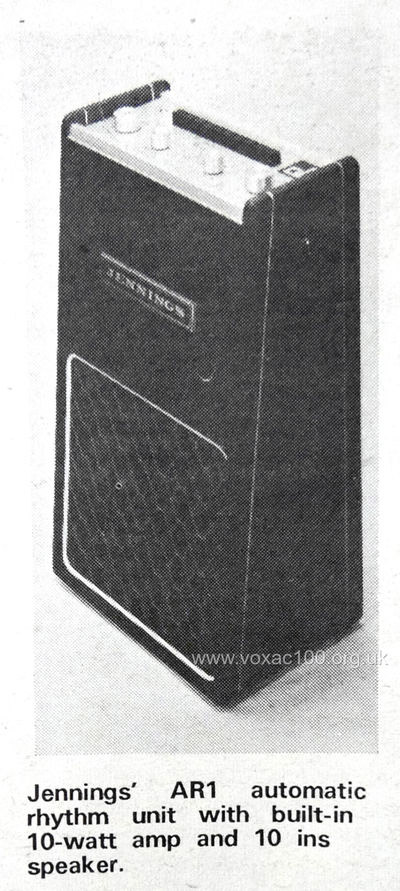
Music trade magazine, August 1970.
18th February
The Russell Hotel Trade Fair, August 1969 - a film crew setting up for a piece on Tom's stand (now Jennings Electronic Industries). "Made in Britain" had previously run features on JMI in 1965 and 1966. More on JEI to come soon.

Music trade press, September 1969.
17th February
A larger image of version 3 of OS/036 (for the AC100 mark 2) coming shortly, thanks to Martin Kelly. A copy of this version was embodied in the Thomas Organ amplifiers manual.
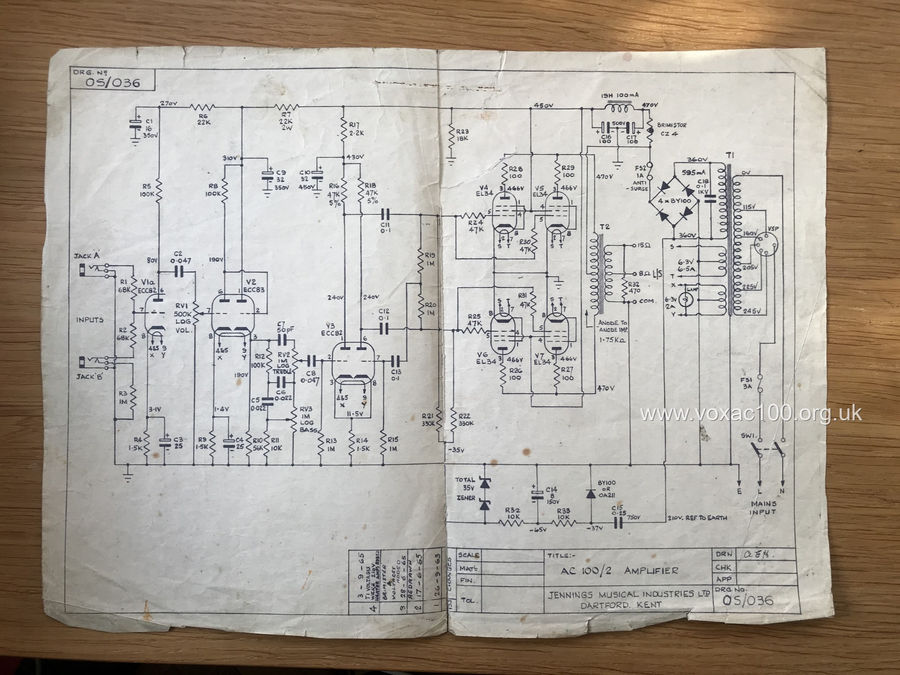
OS/036 version 3, AC100 mark 2, last dated change: 3rd September 1965.
15th February
Just to signal that Nick Sternberg has set up a superb page on the Jennings fuzz pedal (1968-1973) on his fuzzboxes.org website.
8th February
Some notes on the West Wickham Festival, Saturday 1st August, 1964. The idea, devised by David Meyer, founder of Wickham Enterprises, was to bring together a mix of "name" and local bands for a day-long event - any profits accruing from the sale of tickets going to charity. JMI and Selmer provided equipment and mounted displays along with other manufacturers in a tent set up for the purpose.
Headline acts were: Manfred Mann, Johnny Dankworth and his Orchestra, and the Merseybeats.
Rodney Angell, who lived fairly close by, was on hand to look after the JMI side of things. Rodney at the time was one of the company's amplifier service engineers.
Unfortunately the event was not a success. The hoped-for audience of 10,000 turned out to be closer to 2,000 on the day.
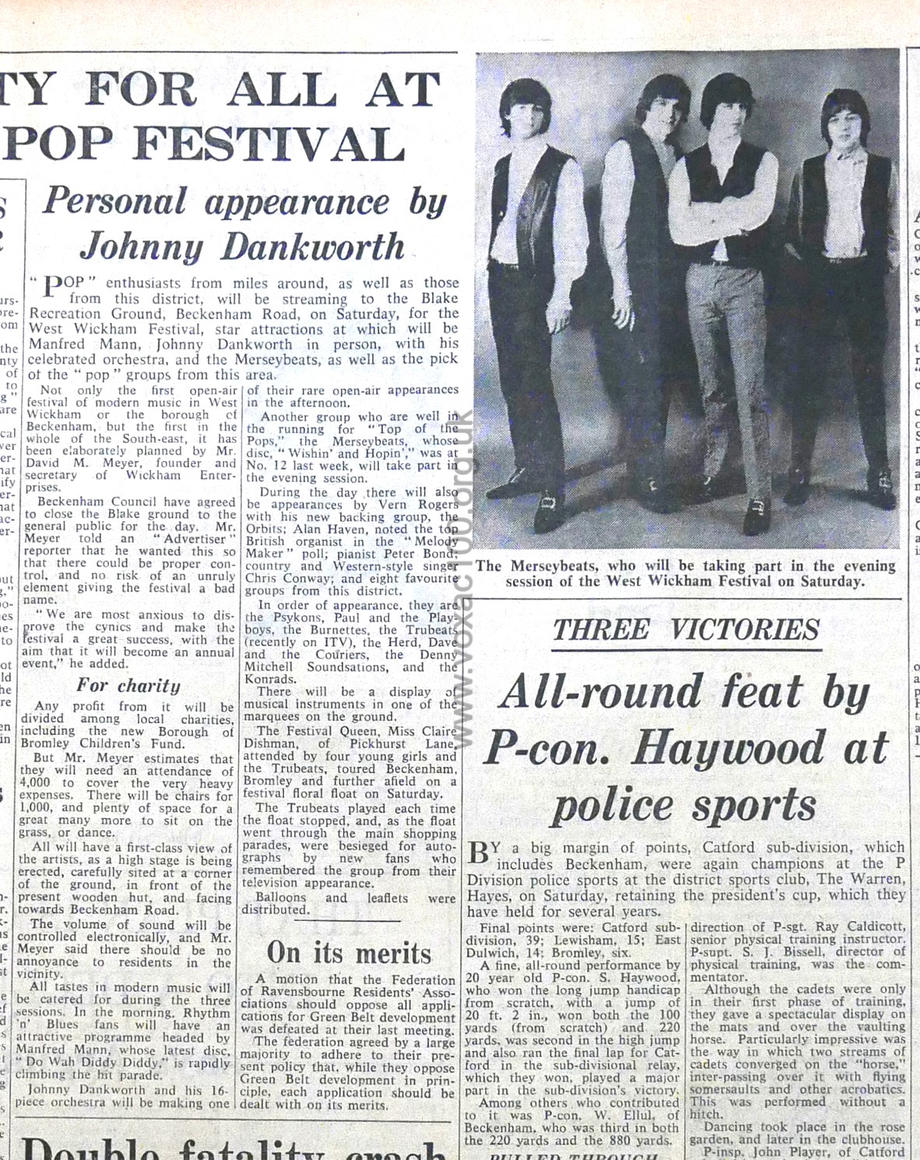
Piece headed "Plenty for All in the Pop Festival" in the "Bromley Advertiser".
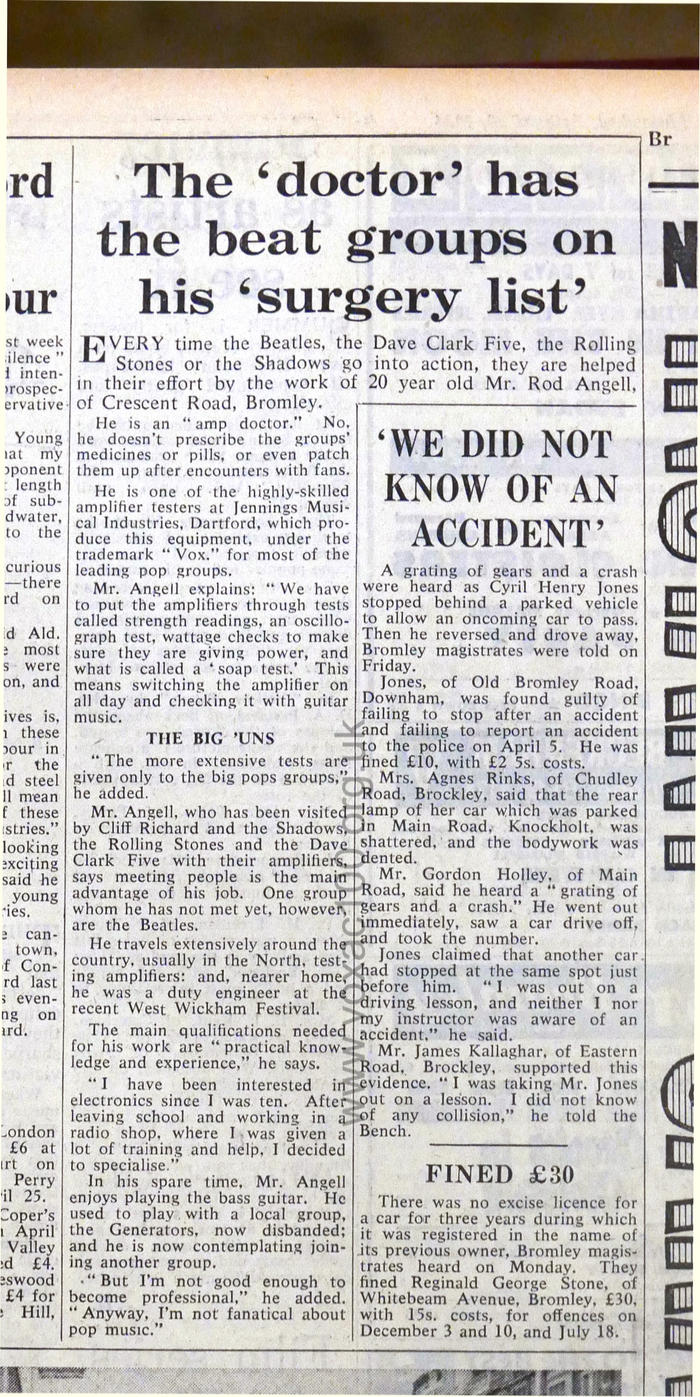
"Bromley Advertiser" - "soap test" is of course "soak test".
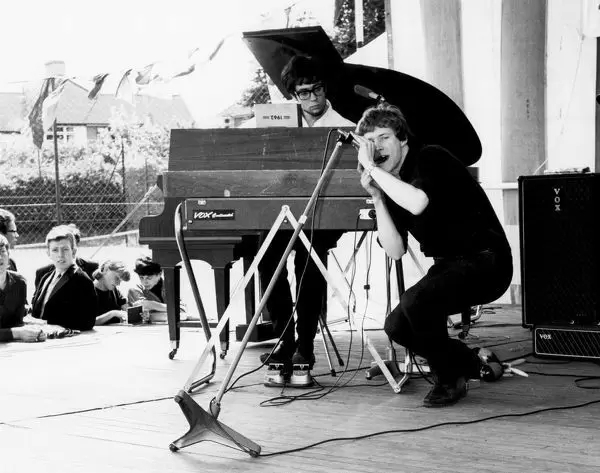
Manfred Mann on stage - a T60 cabinet and amplifier in the background.
1st February
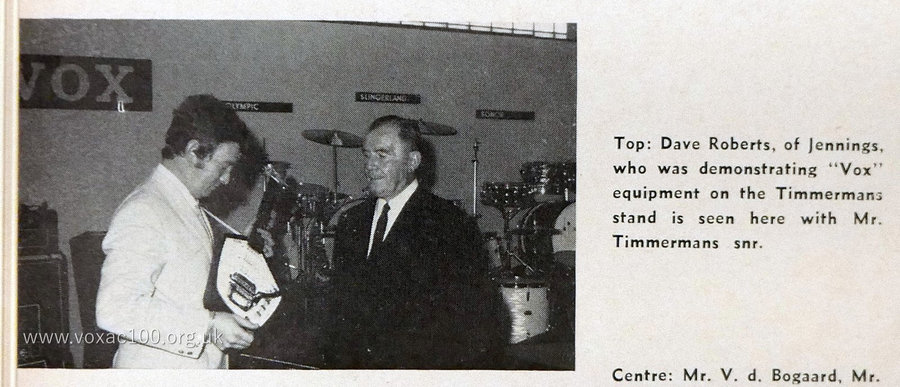
A rough-print picture of Dave Roberts, Vox demonstrator, displaying a Phantom guitar at the Timmermans stand, Amsterdam Electronics Fair, 21st September to 1st October, 1967. At left, a Vox Supreme and column speaker. JMI first attended the show in 1965.
26th January
Thanks to Martin Kelly, a hitherto unpublished pricelist for PA equipment - from 1964 (?) - saved from oblivion by Rodney Angell, who began at JMI as amp tester and service engineer. Mains voltage is given as 230 volts rather than 245 volts, which was the norm in the UK in the 1960s.
One of the first companies in the UK to market small mobile PA systems was Westrex, one of JMI's contractors from Spring 1961.

21st January
A note on the speaker connectors on early Vox PA amplifiers. Below, a detail of the back panel of a PA100 from mid 1965 (more to follow). As can be seen, the amp originally had six sockets - 1/4" in diameter - corresponding to the two sets of legends for the impedance settings "0", "8", and "15". Three holes were later enlarged to accommodate jack sockets.
The sockets fitted at factory were evidently Belling Lee L1737s, probably white or grey to judge from the small detail of the PA50 below. L1737 sockets were produced until recently as 2mm connectors - to accept 2mm "banana" or "wander" plugs - current rating 10 amps at 60 volts. In the 1960s, the format will have been 5/64" rather than 2mm.
In spite of the adequate current rating, these sockets and plugs seem ill-suited (in their flimsiness) to the regular plugging in and unplugging of speaker cables. This may to some extent explain why so few early Vox PA amps survive - plugs or sockets failed, taking out the output transformer.

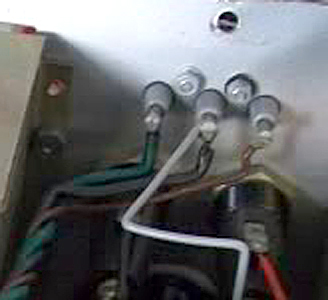
Detail from a slope-fronted PA50 from later 1965.
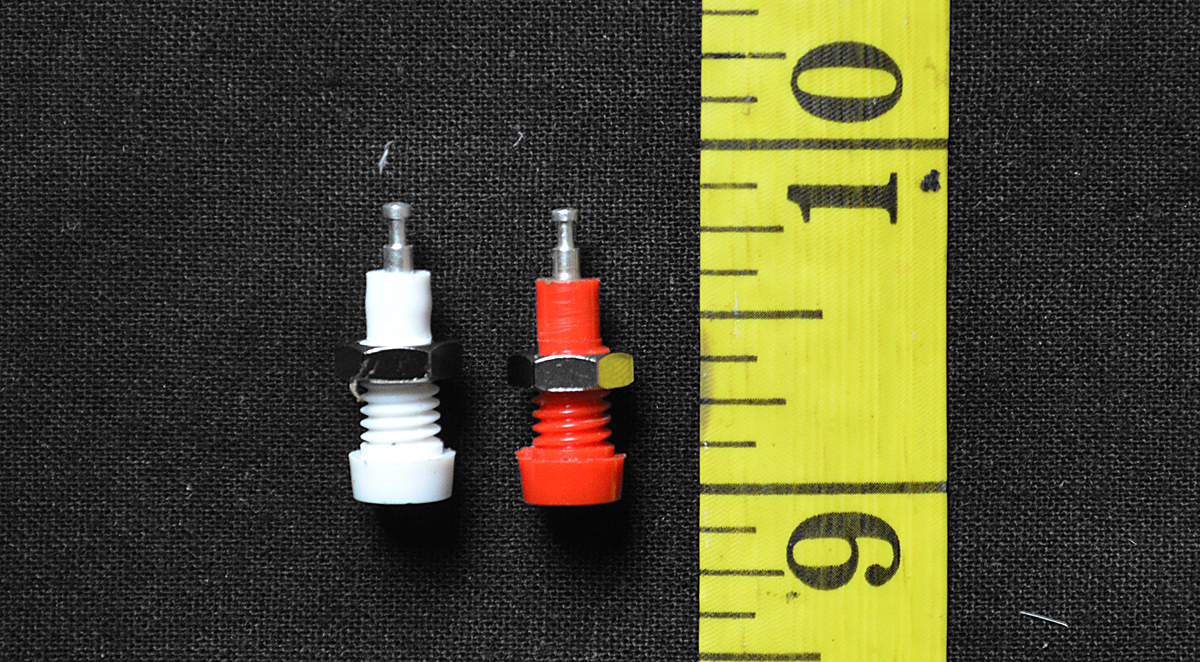
Belling Lee L1737 sockets - diameter of the body now 6mm, the closest metric equivalent to the 1/4" diameter of the originals (6.3mm).
13th January
Thanks also to Alfonso, pictures of AC100 Mark 2 serial number 1392 with its 2x15" speaker cabinet. Note the three-line serial number plate. The amp's preamp is in good original order - red and yellow Lemco signal capacitors, blue Hunts electrolytics. In the speaker cabinet, the original Celestion T1109 drivers.


AC100 serial number 1392
12th January
Thanks to Alfonso, pictures of AC100 Mark 2 serial number 978, last quarter of 1965. Grille cloth has been replaced, and some changes in the power section, but little done in the preamp, and the amp as a whole in good working order. Further pics to come, along with a set of AC100 serial number 1392.
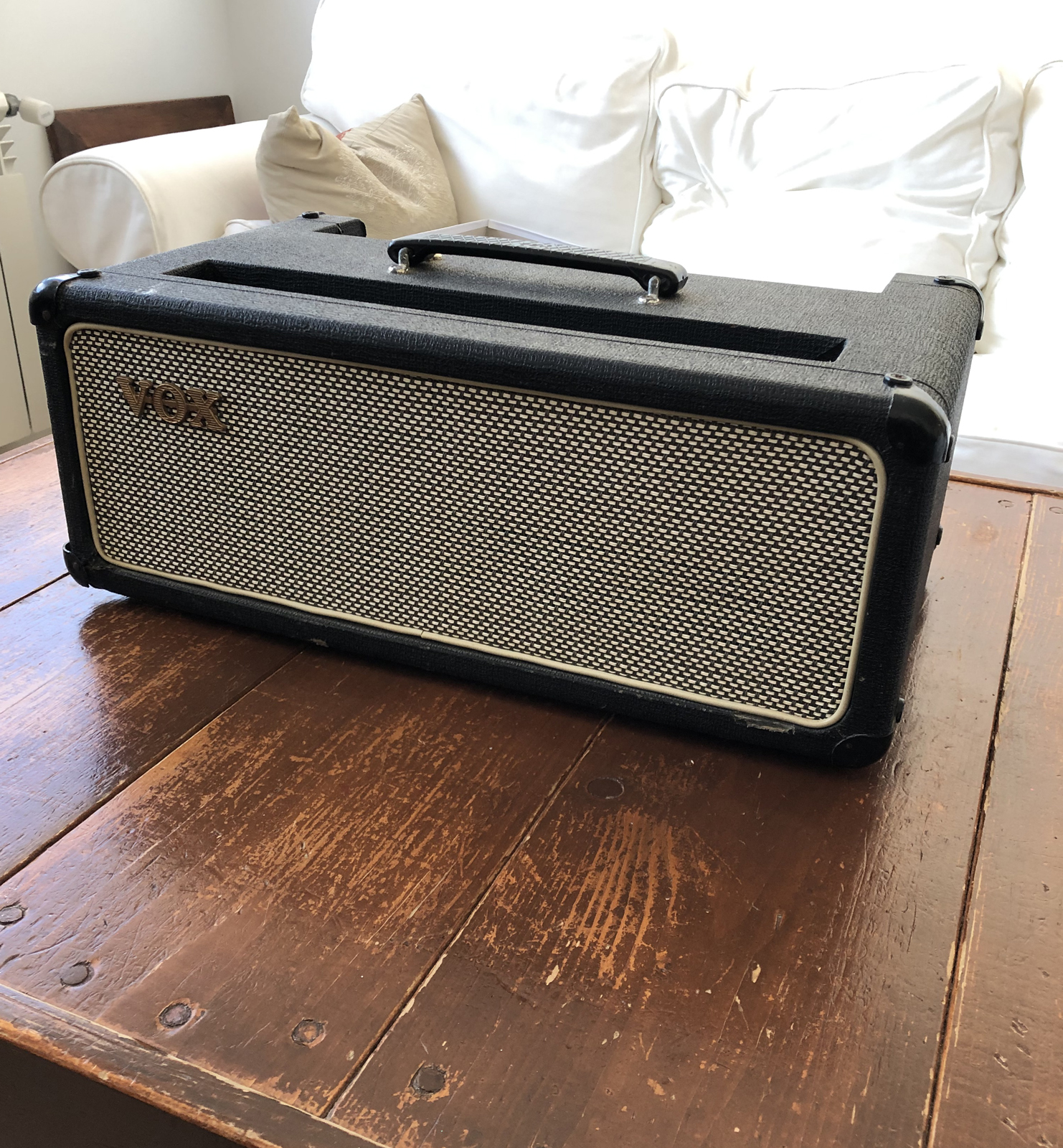
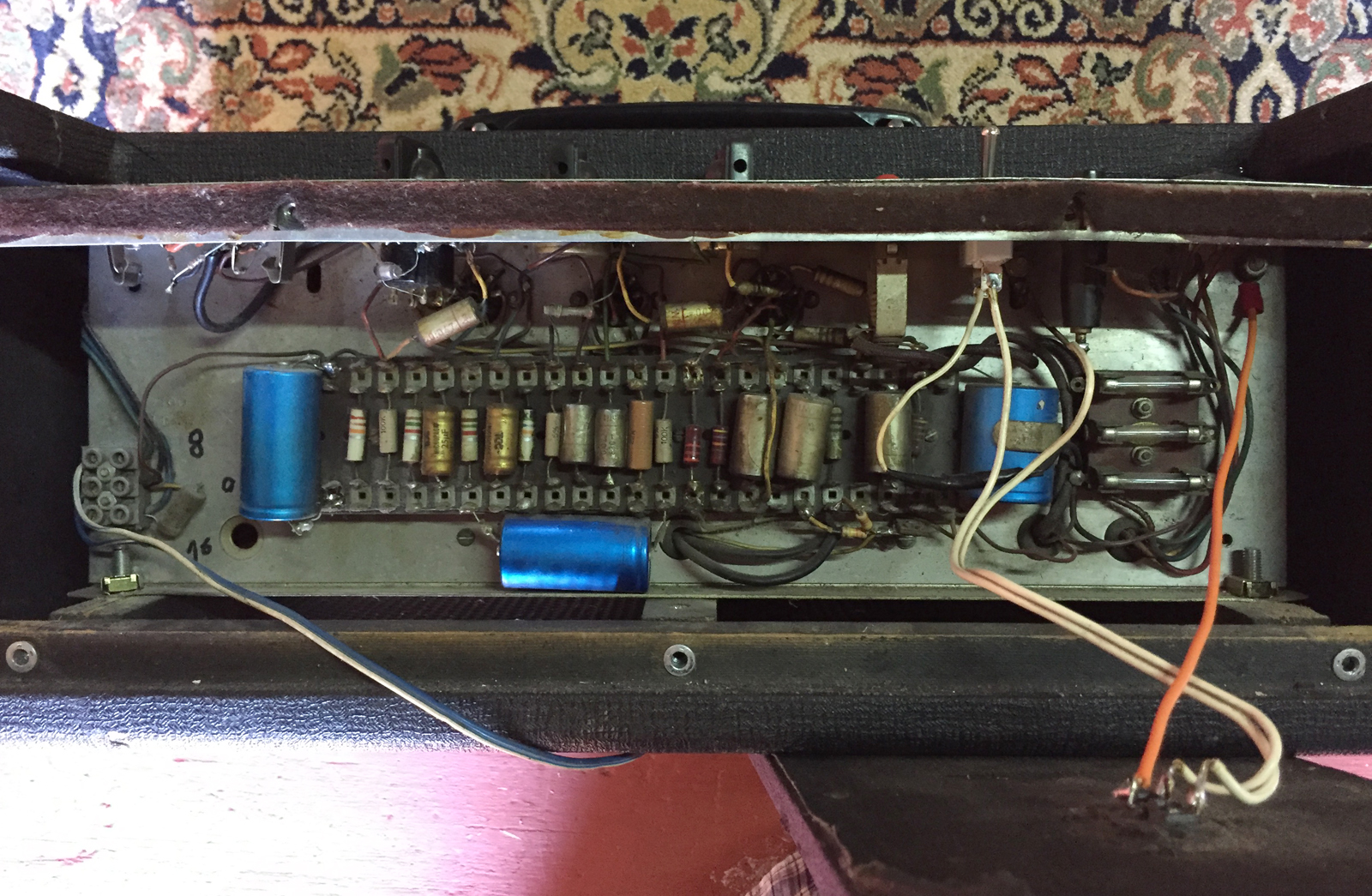
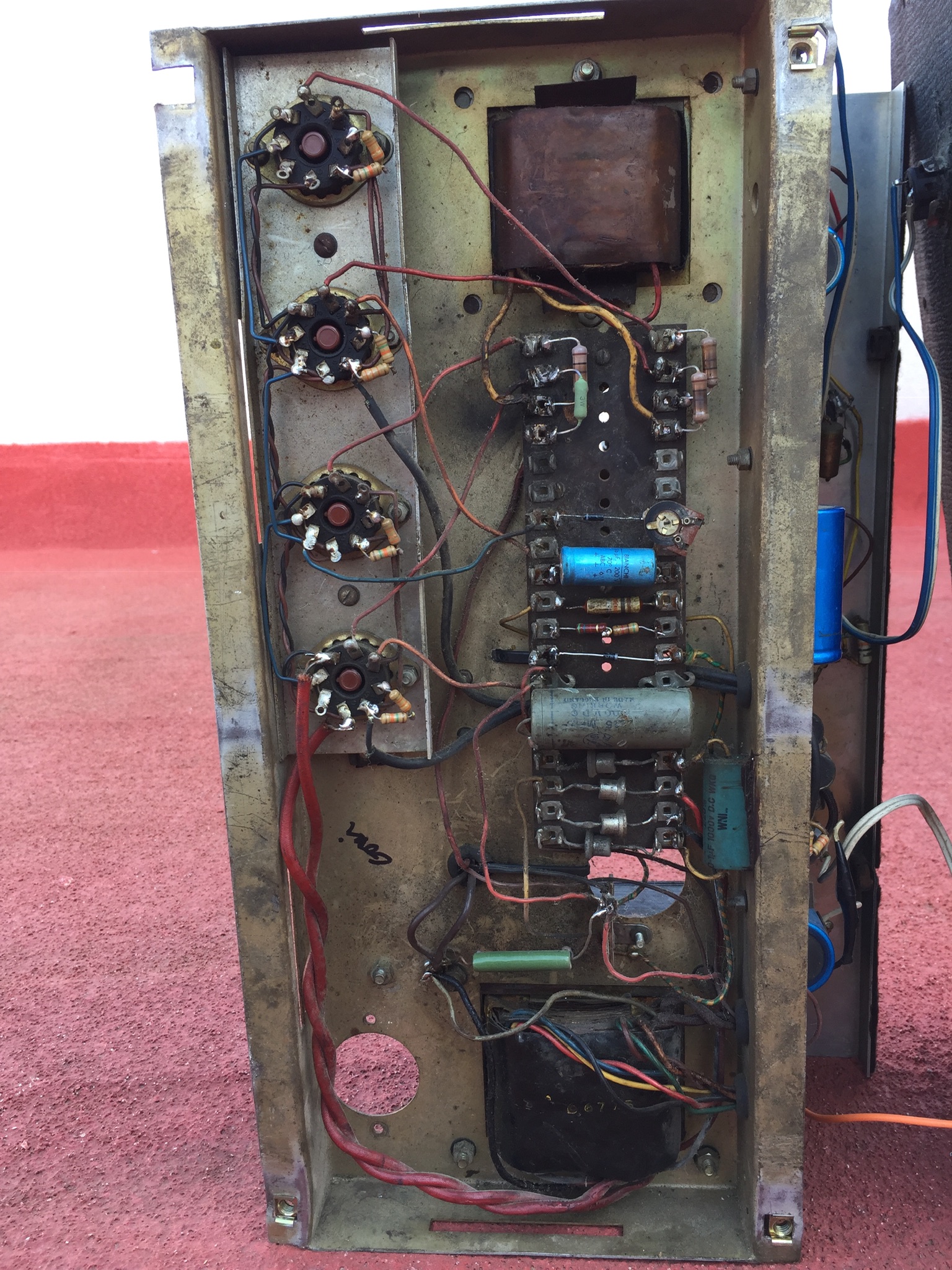
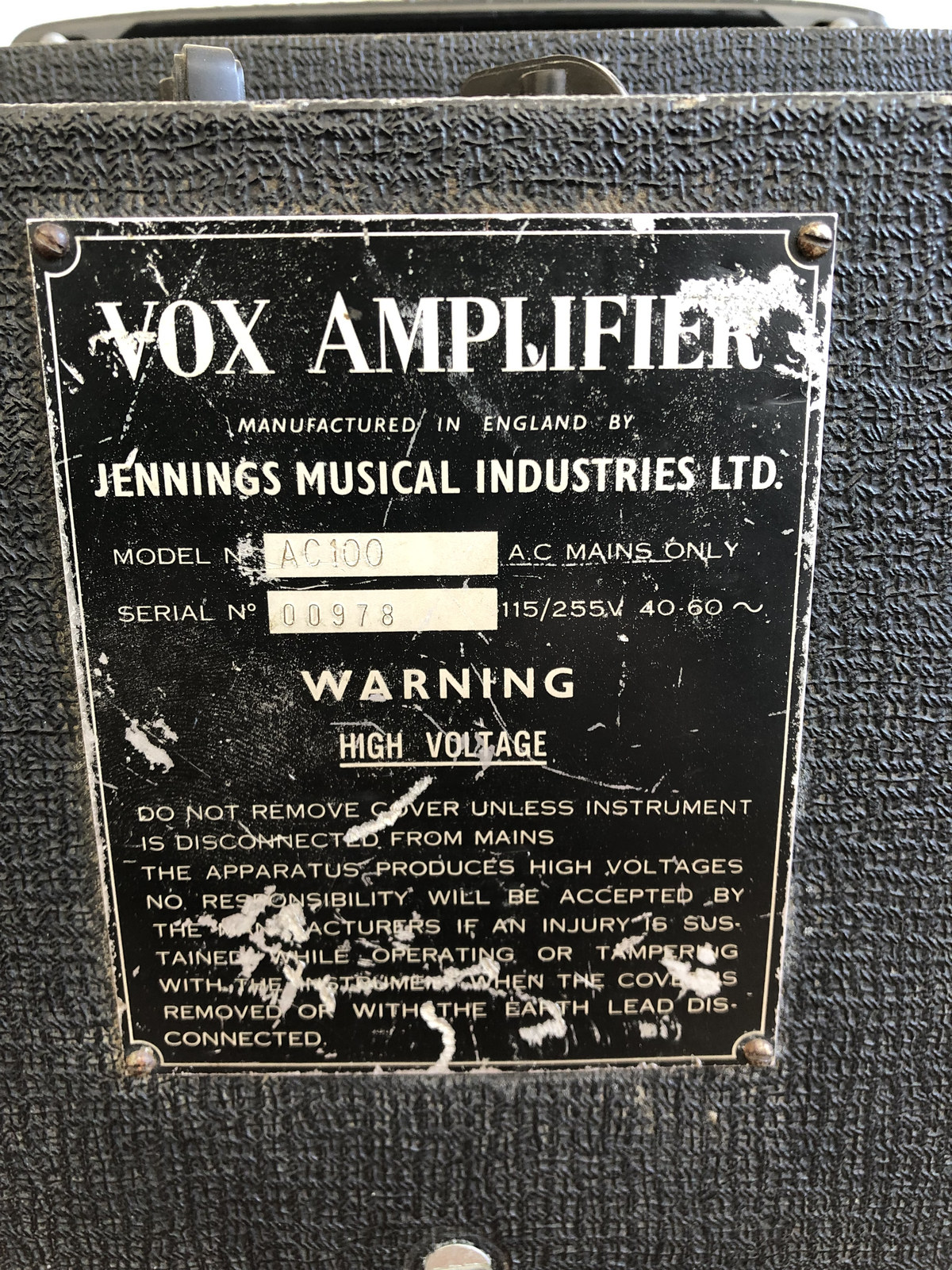
AC100 serial number 978.
3rd January (2)
The page on the Dartford Road Works has been updated with new material (contemporary newspaper reports) relating to end of days at JMI. More to follow.
3rd January
A section from a piece in the local Dartford press, 29th April, 1967 - the top two floors of the Erith Works officially opened on the 19th and all manufacturing remaining at 115 Dartford Road moved there, Dartford Road now used only for Dispatch.
For the situation in January 1967, see the foot of this page, entry for 4th November.
The creation of a "Research Laboratory" presumably meant that the rooms set aside for R&D on the upper floors of 117 and 119 Dartford Road were to some extent emptied out.
The new amplifier making section was for the new range of solid state amps (Conqueror, Defiant, Supreme, et al.). The page on the West Street Works has now been updated. It may be necessary to split it into two shortly.

In June 1967, the music trade press recorded that the Sales, Administration, Accounts, and Publicity Departments had moved across to Erith.
